Heavy rooftop equipment can damage commercial roofs without proper rooftop equipment supports. Large HVAC units, chillers, generators, air handlers, and other mechanical systems place concentrated loads on the roofing assembly that can compress insulation, wear roofing membranes, obstruct drainage, and create long-term maintenance challenges when they are not properly supported.
Properly designed rooftop equipment supports do far more than elevate mechanical equipment above the roof surface. They distribute concentrated loads, maintain clearance for drainage and routine maintenance, and provide a stable foundation for heavy mechanical systems while helping protect the roof below. Whether supporting new construction or retrofitting an existing building, selecting the right rooftop equipment supports is an important step toward extending roof service life and creating a safer, more accessible rooftop layout.
How Rooftop Equipment Supports Protect Commercial Roofs
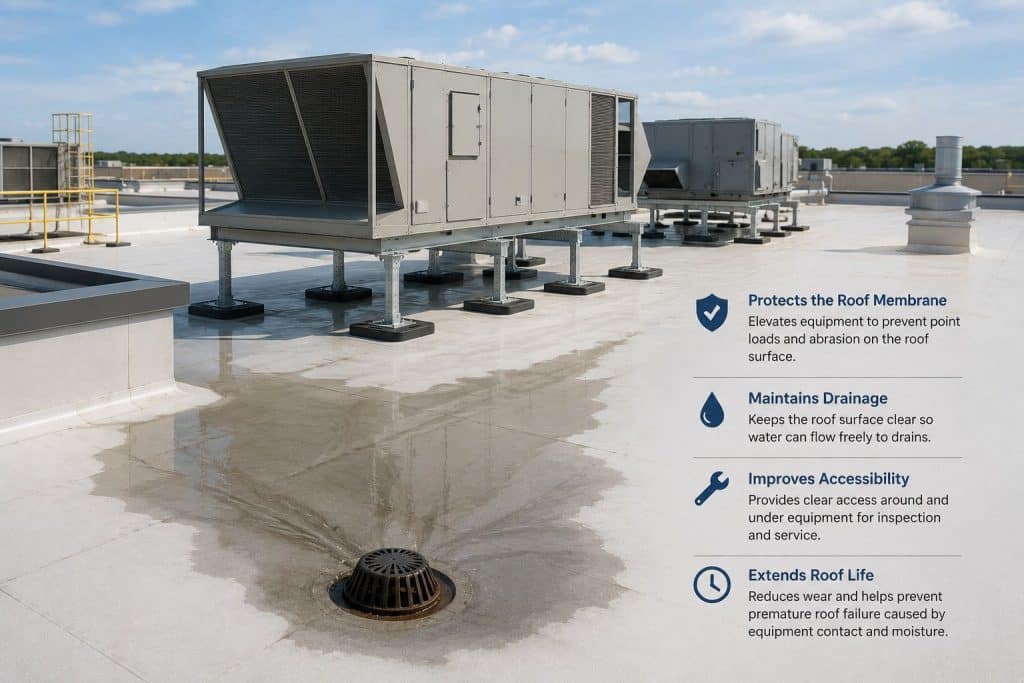
The primary purpose of roof equipment supports is to protect the roofing system while safely supporting the weight of mechanical equipment. Commercial roofing assemblies are designed to withstand a combination of dead loads, live loads, wind, snow, and foot traffic, but placing heavy equipment directly on the roof can create concentrated loads that exceed what the roofing materials were intended to handle. Over time, these concentrated loads can compress insulation, damage the roof membrane, and contribute to premature deterioration that is expensive to repair.
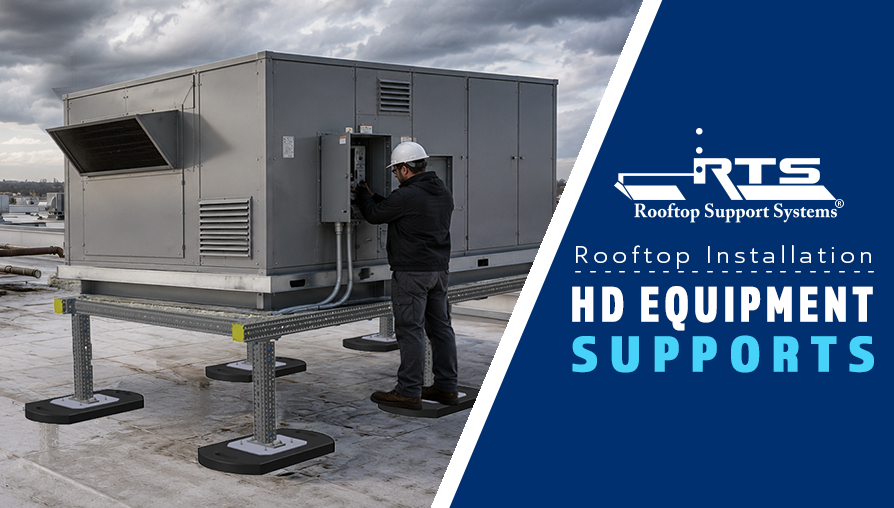
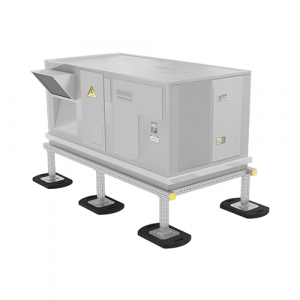
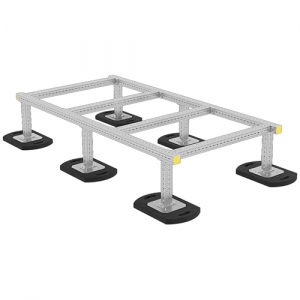
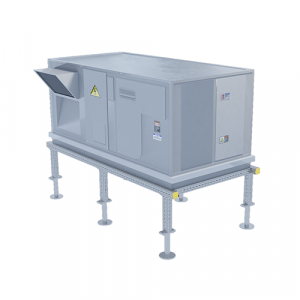
Properly designed Heavy Duty Roof Equipment Supports distribute equipment loads across larger bearing surfaces, reducing pressure on individual areas of the roof. By elevating equipment above the roof membrane, supports also help preserve drainage paths and reduce the likelihood of standing water collecting around mechanical equipment. This clearance allows maintenance personnel to inspect the roof, remove debris, and identify potential roofing issues before they develop into leaks or more significant structural problems. Instead of becoming obstacles that complicate roof maintenance, well-designed support systems contribute to a rooftop layout that protects both the equipment and the roofing assembly throughout its service life.
Protecting the roof extends beyond simply supporting the weight of the equipment. Mechanical systems are regularly serviced, repaired, and eventually replaced, all of which increase foot traffic around rooftop units. Without adequate clearance beneath and around the equipment, technicians may be forced to work directly on the roofing membrane or place tools and materials in ways that increase the risk of accidental damage. Rooftop equipment supports create the working space necessary for safer inspections and maintenance while reducing unnecessary contact with the roofing surface.
Another important consideration is long-term roof replacement. Equipment that rests directly on the roof often has to be lifted or temporarily relocated during reroofing projects, adding time, labor, and expense. Support systems that properly elevate equipment simplify future roofing work by providing access beneath mechanical systems and reducing the number of obstacles contractors must work around. For building owners, protecting the roof today also helps reduce the complexity of future maintenance and renovation projects.
Improve Stability for Heavy Mechanical Equipment
Not all rooftop equipment creates the same structural demands. Heavy mechanical equipment typically includes large rooftop HVAC units, chillers, cooling towers, generators, air handling units, pumps, and other systems that place significant concentrated loads on the building. These systems often include rotating components, connected piping, electrical conduit, ductwork, and other utilities that can be affected by equipment movement or vibration. Supporting this type of equipment requires more than simply providing enough capacity to carry the weight. Heavy duty equipment supports must also maintain stability throughout changing operating conditions and environmental exposure.
Equipment movement may result from vibration during normal operation, thermal expansion and contraction, wind loading, or maintenance activities. If the support system allows excessive movement, connected piping, conduit, ductwork, or equipment connections can experience additional stress over time. Maintaining proper alignment is particularly important for larger mechanical systems because even minor movement can affect connected building systems and increase maintenance requirements. A properly designed support system helps keep equipment securely positioned while maintaining the clearances required for safe operation and servicing.
Heavy duty equipment supports should also be selected with the specific rooftop environment in mind. Factors such as equipment footprint, weight distribution, roof construction, and local environmental conditions all influence the type of support system that should be used. While many rooftop applications benefit from non-penetrating support systems, larger mechanical equipment or unique structural conditions may require mechanically attached or structural support solutions designed specifically for the project. Selecting the appropriate support system begins with understanding both the equipment and the roof it will occupy.
Stable support systems also improve safety for maintenance personnel. Technicians routinely perform inspections, replace components, connect utilities, and service rooftop equipment while working in confined spaces around mechanical systems. Equipment that remains properly supported and aligned provides a more predictable and secure working environment, reducing unnecessary movement and helping maintenance activities proceed more efficiently.
Extend Equipment Life with Proper Rooftop Equipment Supports
Heavy rooftop equipment represents a significant investment, making equipment longevity an important consideration during both new construction and retrofit projects. While maintenance programs focus on servicing mechanical components, the quality of the support system beneath the equipment also influences long-term performance. Properly designed rooftop equipment supports reduce unnecessary stress caused by vibration, uneven loading, and movement that can gradually affect equipment, connected piping, conduit, and ductwork.
Maintaining proper elevation above the roof surface also contributes to better operating conditions. Clearance beneath rooftop equipment allows water to drain naturally, reduces debris accumulation around equipment bases, and provides the space necessary for routine roof maintenance. For HVAC equipment, maintaining adequate clearances also helps preserve the airflow requirements established by the equipment manufacturer, avoiding situations where restricted airflow may affect operation or servicing.
Routine maintenance becomes more efficient when technicians have safe access around the equipment. Rather than working in confined spaces directly against the roof membrane, elevated rooftop equipment provides room to inspect mechanical connections, replace components, and perform preventative maintenance without increasing the likelihood of accidental roof damage. This improved accessibility encourages regular service, which is often one of the most important factors in extending equipment life.
Proper support also benefits the systems connected to the equipment. Mechanical piping, electrical conduit, cable trays, and ductwork all rely on stable equipment positioning to maintain alignment. Minimizing movement at the equipment level helps reduce unnecessary stress throughout the connected mechanical systems, contributing to more reliable long-term operation.
Flexible Rooftop Equipment Supports for Heavy Mechanical Equipment
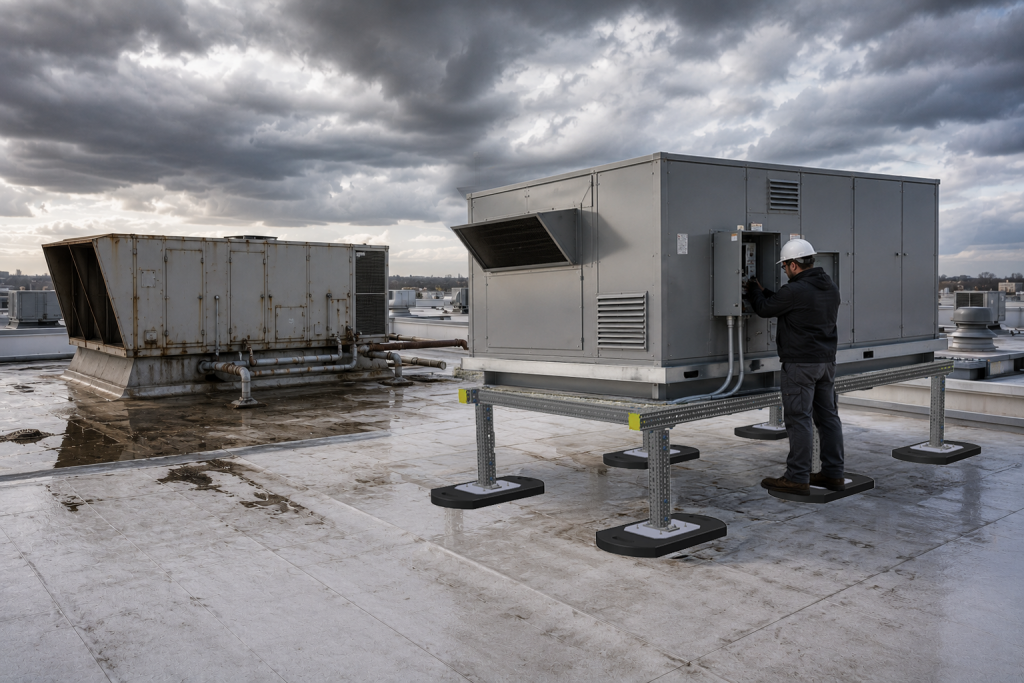
Heavy mechanical equipment rarely fits a standard support solution. Every rooftop presents a unique combination of equipment weights, footprints, elevations, utility routing, and roof conditions that influence how rooftop equipment supports should be designed. A support system that works well for a packaged rooftop unit may not be suitable for a generator, chiller, or cooling tower with significantly greater loads and different maintenance requirements. The goal is not simply to support the equipment but to create a system that protects the roof while providing safe access and accommodating the mechanical layout.
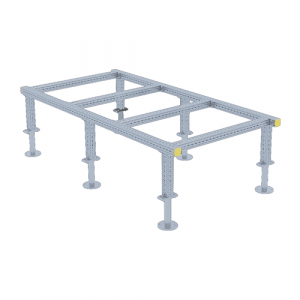
Modern rooftop equipment supports can be configured to meet a wide range of project requirements without relying on custom field fabrication for every installation. Adjustable heights, modular framing systems, and custom spans allow supports to accommodate changes in roof elevation, varying equipment footprints, and rooftop obstructions while maintaining proper load distribution. This flexibility becomes especially valuable on retrofit projects where existing mechanical equipment, roof penetrations, and utility routing often dictate the available installation space.
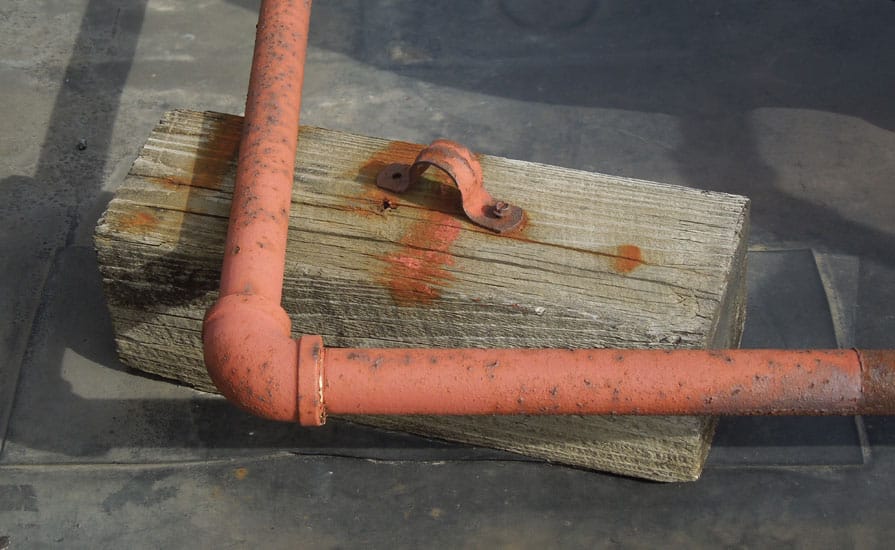
Many projects also require multiple support types working together across the same rooftop. Equipment rails for rooftop equipment provide continuous support for larger rooftop units, while HVAC equipment roof supports may be configured to carry condensers, air handling units, or associated mechanical equipment. Pipe supports, conduit supports, cable tray supports, and duct supports can then be coordinated with the primary equipment supports to create organized utility pathways that simplify maintenance while reducing unnecessary roof contact.
Selecting the right roof mounted equipment supports depends on much more than equipment weight alone. Roof construction, roofing material, equipment location, service clearances, future expansion plans, and maintenance requirements all influence the final support configuration. Choosing a system designed specifically for the project helps contractors create an organized rooftop layout that supports both current equipment and future modifications without compromising roof performance.
Faster Installation with Roof Mounted Equipment Supports
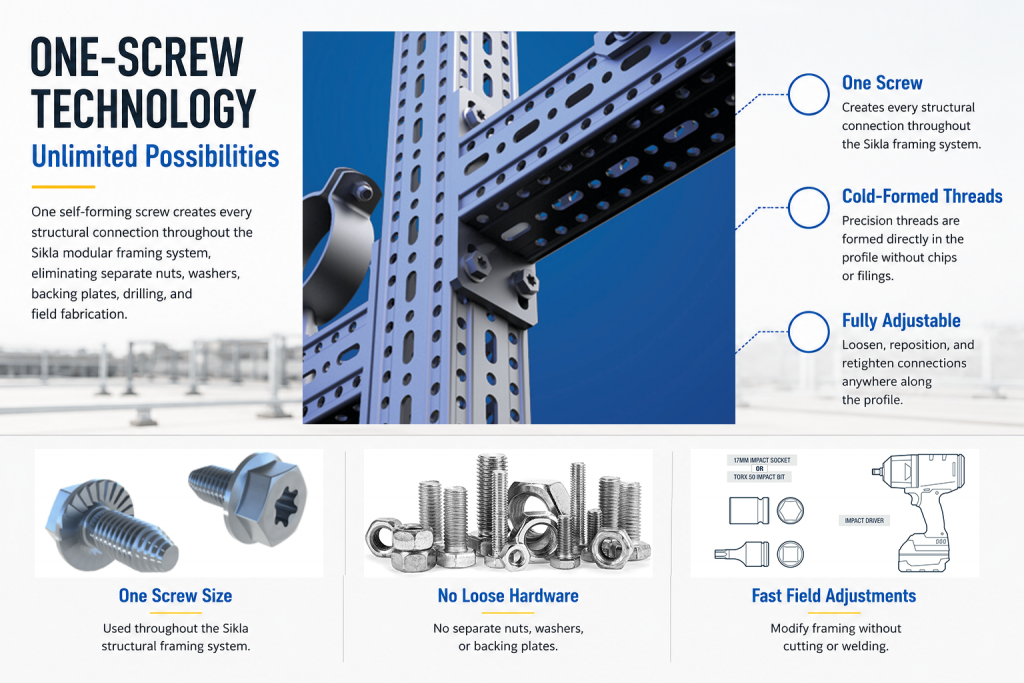
Installation efficiency has become increasingly important as project schedules continue to tighten and skilled labor remains in high demand. Modular roof mounted equipment supports help simplify installation by reducing field measuring, cutting, welding, and fabrication that would otherwise be required to build custom support structures on the roof. Prefabricated components arrive ready for assembly, allowing contractors to establish support locations more quickly while maintaining greater consistency throughout the installation.
This approach also improves coordination between trades. Mechanical contractors, roofing contractors, and other project teams benefit from support systems that have been designed around known equipment dimensions and rooftop layouts before installation begins. Reducing field modifications minimizes delays that can occur when support structures interfere with existing equipment, roof drains, conduit runs, or other rooftop systems discovered during installation.
Many rooftop applications also benefit from non-penetrating support systems that help preserve the roofing assembly while reducing installation complexity. By distributing loads across protective bases rather than attaching directly through the roof membrane, these systems can often be installed without creating additional roof penetrations. However, not every application is appropriate for a non-penetrating design. Large rooftop equipment with significant concentrated loads or project-specific structural requirements may require mechanically attached or structural framing systems designed to meet the demands of the installation.
Regardless of the support type selected, planning the support system early in the design process reduces field adjustments and helps contractors complete rooftop installations more efficiently. Coordinating equipment locations, support layouts, and utility routing before materials reach the jobsite often leads to smoother installations and fewer unexpected challenges once work begins on the roof.
Easier Maintenance Starts with Proper Roof Equipment Supports
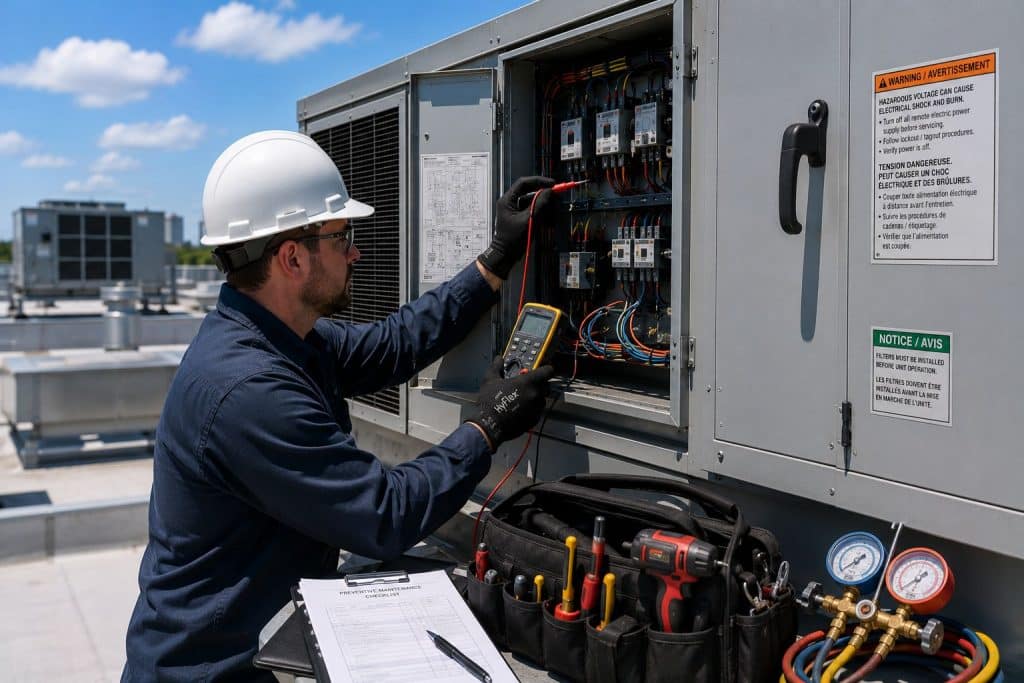
The quality of a rooftop installation is measured not only by how well it supports mechanical equipment on day one, but also by how easy it is to maintain over the years that follow. Properly designed equipment roof supports create the working space technicians need to inspect, service, and repair both the mechanical systems and the roofing assembly without unnecessary obstacles. When heavy equipment is elevated above the roof surface, maintenance personnel can move more safely around rooftop units while reducing the risk of damaging the roofing membrane during routine service.
Access beneath and around rooftop equipment also makes roof maintenance more practical. Roofing contractors need to inspect seams, flashings, drains, and membrane conditions throughout the life of the roof, yet equipment installed too close to the surface can make these areas difficult or impossible to reach. Proper support systems maintain the clearance needed for inspections, debris removal, and minor repairs without requiring equipment to be disconnected or relocated. This accessibility allows small roofing issues to be identified and corrected before they become more costly problems.
Maintenance access extends beyond the equipment itself. Connected piping, conduit, cable trays, and ductwork all require periodic inspection and servicing, particularly as mechanical systems age or are modified. An organized rooftop layout supported by properly designed equipment supports gives technicians clear access to these utilities while reducing congestion across the roof. This not only improves maintenance efficiency but also creates a safer working environment for everyone accessing the rooftop.
As buildings evolve, rooftop mechanical systems often change as well. Equipment is replaced with newer models, utilities are rerouted, and additional systems are added to meet changing operational requirements. Support systems that maintain adequate clearances and provide organized pathways make these future modifications easier to complete while minimizing disruption to the existing roofing system.
Lower Lifecycle Costs Through Proper Rooftop Equipment Supports
The value of rooftop equipment supports extends well beyond the initial installation. While properly designed supports represent an investment during construction or renovation, they can help reduce costs throughout the life of both the roofing system and the mechanical equipment. Protecting the roof from concentrated loads, reducing membrane damage, and improving maintenance access all contribute to lower long-term ownership costs compared to installations where equipment is placed directly on the roof or supported with solutions that are not suited to the application.
Roof repairs are among the most expensive maintenance items for commercial buildings, particularly when leaks affect occupied spaces or sensitive equipment below. By distributing equipment loads, preserving drainage paths, and limiting unnecessary contact with the roofing membrane, rooftop equipment supports help reduce conditions that contribute to premature roof deterioration. Avoiding even a single major roof repair can offset a significant portion of the investment in a properly designed support system.
Lifecycle value also includes the mechanical equipment itself. Stable support systems reduce unnecessary movement, improve maintenance access, and help preserve the alignment of connected piping, conduit, and ductwork throughout the equipment’s service life. When equipment can be serviced more efficiently and operated under stable conditions, facility managers are often better positioned to maximize the useful life of expensive mechanical assets.
Future reroofing projects also become less disruptive when rooftop equipment has been installed with long-term maintenance in mind. Equipment that is properly elevated and supported is generally easier for roofing contractors to work around, reducing the complexity of membrane replacement and roof repairs. Combined with the reduced likelihood of equipment-related roof damage, these advantages help building owners protect one of the most valuable components of their facility while controlling maintenance costs over time.
Who Provides Structural Assessments for Rooftop Equipment Additions?
Adding heavy mechanical equipment to an existing building often raises an important question: Who can provide structural assessments for rooftop equipment additions? In most cases, the answer is a licensed structural engineer. Structural engineers evaluate whether the existing building can safely support new rooftop loads by reviewing the roof framing, structural deck, existing dead loads, anticipated equipment loads, snow loads, wind loads, and other project-specific conditions that may affect the building’s structural capacity.
This evaluation becomes especially important when installing heavy rooftop units, chillers, generators, cooling towers, or other equipment that creates significant concentrated loads. Even when a support system is properly designed, the building itself must be capable of carrying those loads safely. Structural assessments help determine whether the existing roof structure can support the new equipment as proposed or whether additional reinforcement or structural modifications may be required before installation.
It is also important to understand the different responsibilities involved in the project. Rooftop support manufacturers design and supply support systems intended to carry mechanical equipment and distribute loads appropriately. However, verifying that the building’s structure can safely support those loads is the responsibility of the project’s structural engineer. This distinction helps ensure both the support system and the building structure are evaluated as part of the overall design process.
Early coordination between the building owner, structural engineer, mechanical engineer, roofing consultant, and rooftop support supplier can help identify potential challenges before equipment reaches the jobsite. Addressing structural capacity during the planning stage reduces the likelihood of costly redesigns, project delays, or unexpected structural modifications during construction.
Choosing the Right Rooftop Equipment Supports for Your Project
Selecting rooftop equipment supports involves much more than matching a support’s load capacity to the weight of the equipment. The most effective support system is one that considers the complete rooftop environment, including the building’s structural capacity, roof construction, roofing membrane, equipment footprint, service clearances, drainage patterns, and future maintenance requirements. Taking these factors into account helps create an installation that protects both the mechanical equipment and the commercial roof for years to come.
Heavy mechanical equipment places unique demands on commercial roofing systems, making proper support an important part of every rooftop project. Whether supporting large HVAC equipment, generators, chillers, cooling towers, or other mechanical systems, the right rooftop equipment supports help distribute concentrated loads, improve maintenance access, and reduce the risk of unnecessary roof damage. By working with experienced rooftop support specialists early in the design process, contractors, engineers, and facility owners can develop support solutions that meet the specific needs of the equipment while protecting one of the building’s most valuable assets: its roof.