Commercial rooftops create a very different environment for management of cable tray supports than interior spaces. Cable trays installed above the roof deck face constant UV exposure, standing water, freeze-thaw cycles, wind uplift, rooftop traffic, and wide temperature swings that can affect both the tray system and the roof assembly beneath it. A support system that works inside a facility is not automatically suitable for rooftop use, especially when roofing membranes, drainage patterns, and equipment access paths all need to be considered during installation.
That is why installing rooftop cable tray supports involves more than simply elevating a tray above the roof surface. The support system has to distribute weight correctly, maintain separation from the roofing membrane, accommodate expansion and movement, and provide stable attachment points without creating leak risks. Improper installations can lead to membrane damage, tray deflection, water drainage problems, and difficult service conditions for maintenance crews. Careful planning and the right support components help prevent costly rework while extending the service life of both the cable tray system and the roof itself.
What Is a Rooftop Cable Tray Support and Why Is It Different?
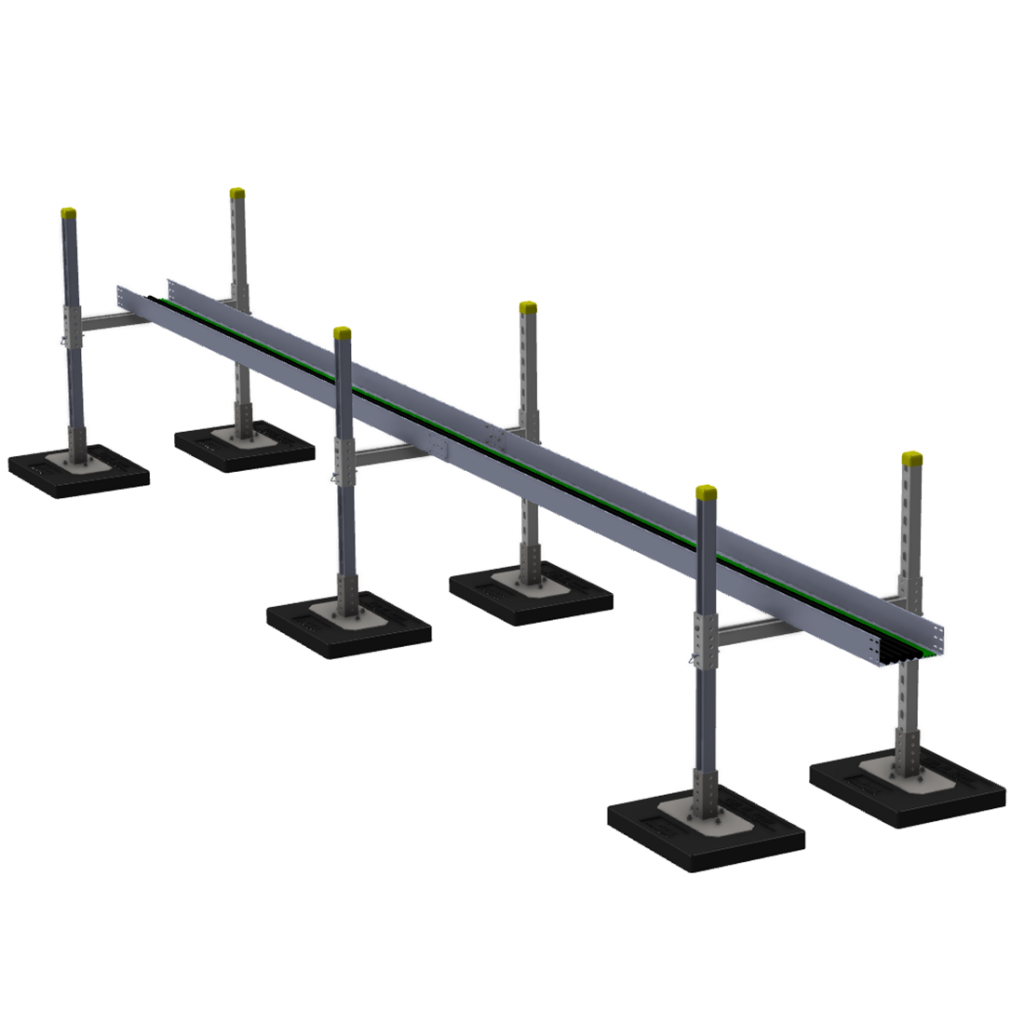
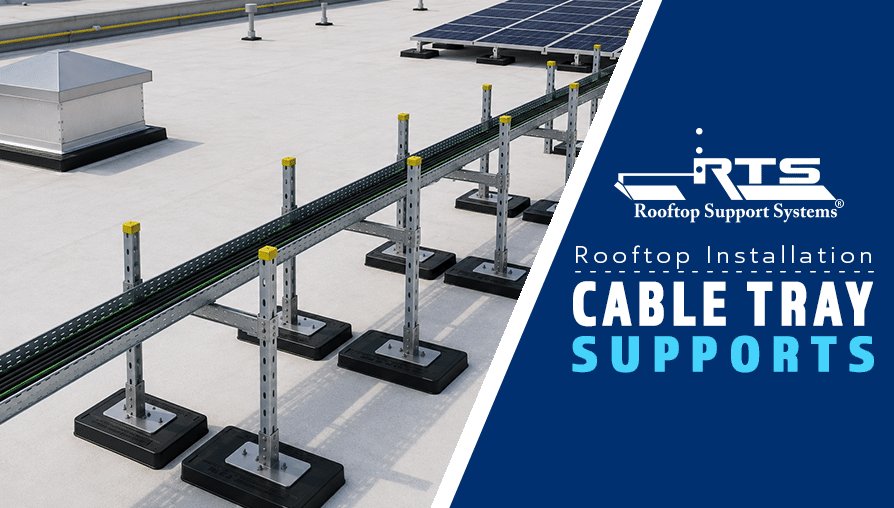
A rooftop cable tray support is a purpose-built support assembly designed to elevate and stabilize cable tray systems on commercial rooftops while protecting the roofing system below. Unlike indoor trapeze supports or improvised field-built methods, rooftop supports are engineered specifically for outdoor exposure and roof compatibility. These systems typically consist of a corrosion-resistant framing assembly paired with a base that distributes loads across the roof surface instead of concentrating weight at a small point.
The biggest distinction between rooftop cable tray supports and standard interior supports is the interaction with the roofing membrane. Interior systems are commonly anchored directly to structure without concern for waterproofing layers. On a rooftop, every penetration introduces potential leak points and can create conflicts with roof warranties. That is why many commercial installations rely on non-penetrating support systems that sit directly on the roof surface using wide rubber or polymer bases designed to protect TPO, PVC, EPDM, and built-up roofing systems.
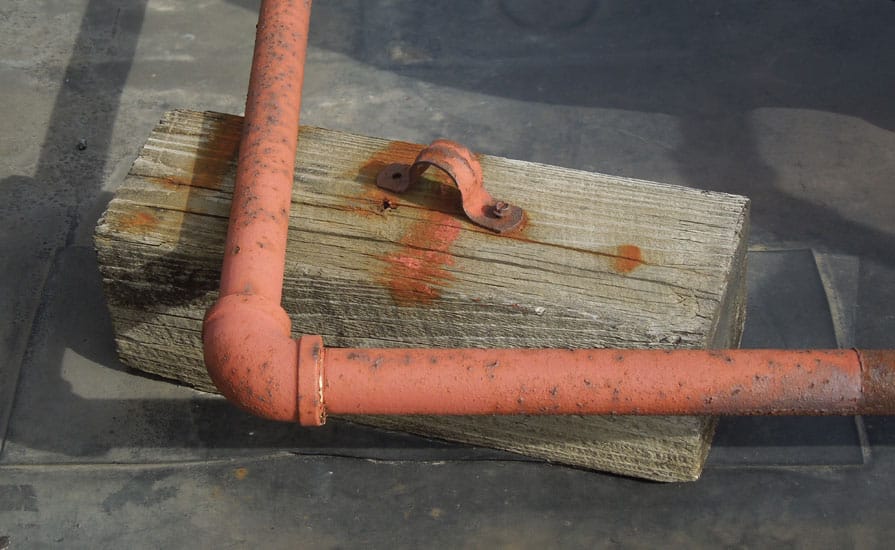
Improvised methods such as wood blocking or unsupported strut assemblies are still occasionally found on rooftops, but these approaches often create drainage problems and inconsistent load distribution. Wood can deteriorate from moisture exposure, shift during freeze-thaw cycles, or compress unevenly beneath loaded cable trays. Rooftop cable tray supports designed for outdoor applications are built to resist corrosion, maintain alignment, and provide predictable load performance over time.
Material selection also separates rooftop supports from indoor systems. Galvanized steel, stainless steel hardware, and UV-resistant support bases are commonly used because rooftop environments accelerate corrosion and material breakdown. Supports must remain structurally stable through years of weather exposure while continuing to protect both the cable tray system and the roofing assembly underneath.
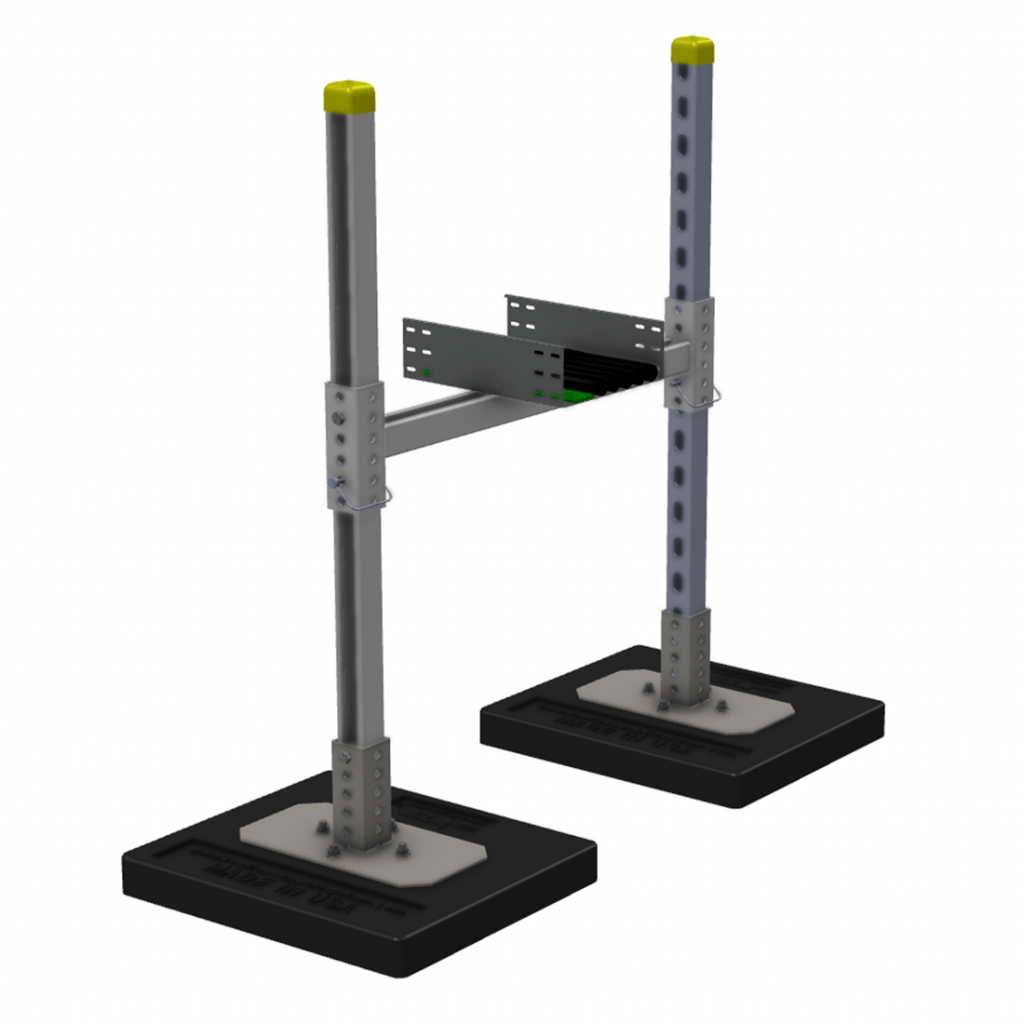
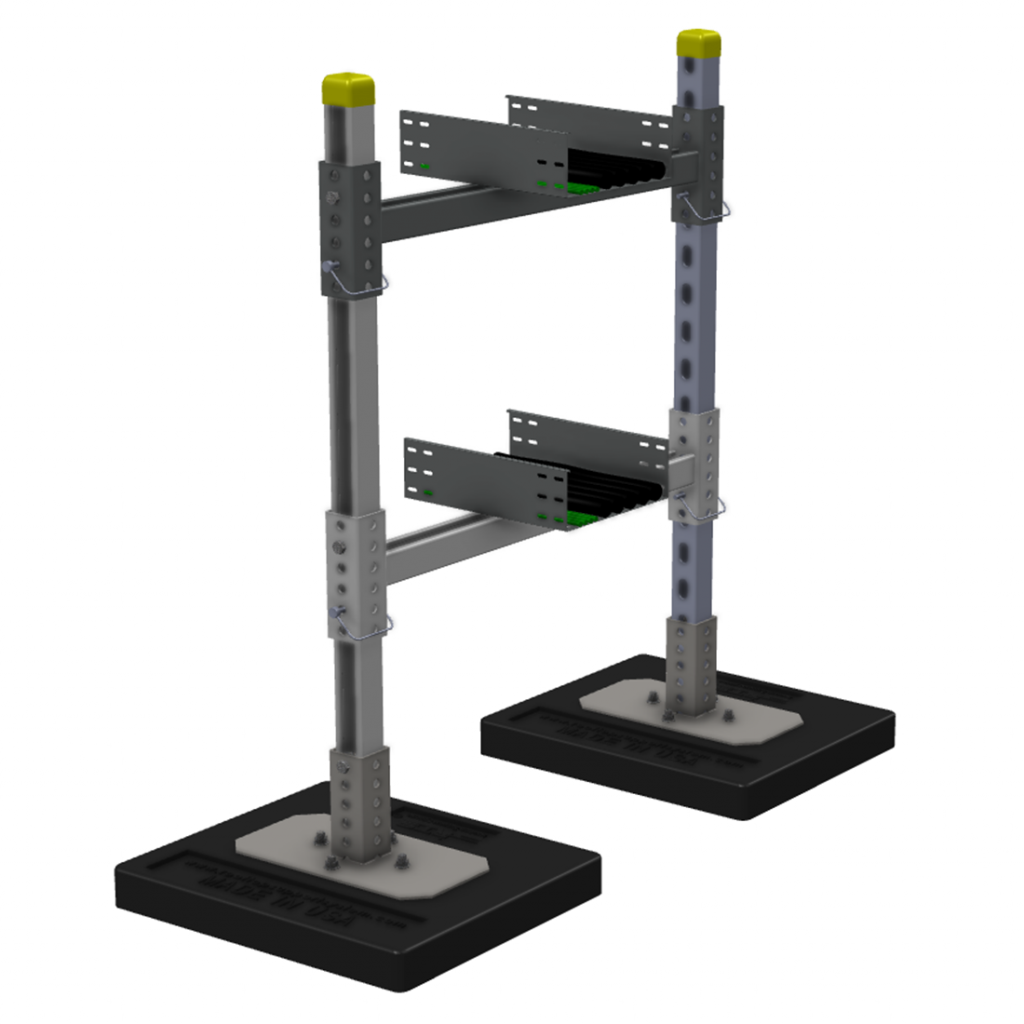
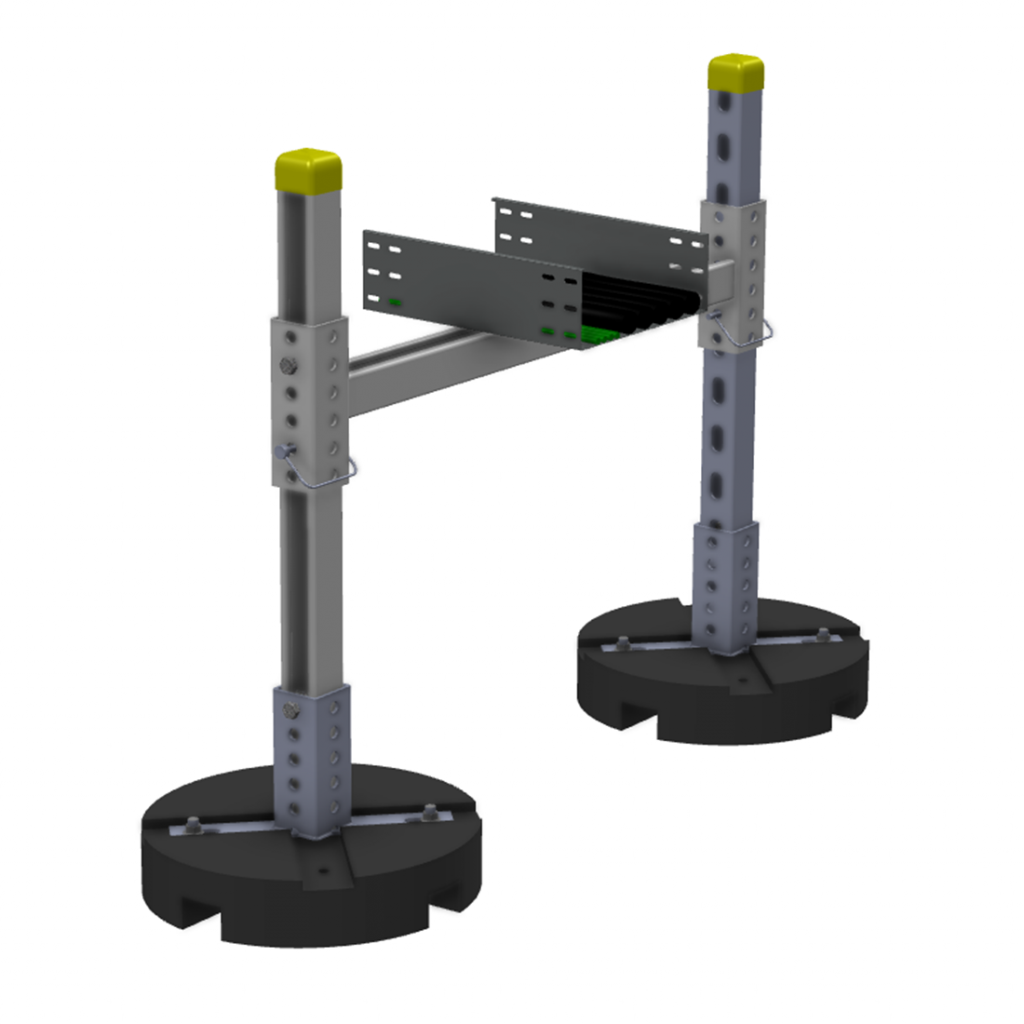
What Are Best Practices for Installing Rooftop Cable Trays?
One of the most important best practices when installing rooftop cable trays is establishing proper support spacing before installation begins. Cable tray systems carry varying loads depending on conductor quantity, cable type, future expansion allowances, and environmental conditions. Support intervals should always align with the tray manufacturer’s recommendations and applicable NEMA standards to prevent tray deflection or over-stressing connections.
Spacing becomes even more important on rooftops where environmental loading adds additional stress to the system. Wind exposure can create uplift forces on empty or lightly loaded trays, while snow accumulation may increase vertical loading significantly during winter conditions. Wider support spacing may appear to reduce installation time initially, but excessive spans can lead to sagging trays, loose connections, and long-term cable strain issues that are difficult to correct after the system is energized.
Non-penetrating rooftop supports are another major best practice for commercial roofing applications. These systems use broad-based supports that rest directly on the roof membrane without requiring structural penetrations through the roofing assembly. This approach helps preserve roof warranties and reduces the likelihood of future leaks. Properly designed support bases also help distribute system loads evenly across the membrane rather than concentrating weight into small contact areas.
Support placement should also account for rooftop drainage patterns and service access routes. Cable tray supports should never obstruct roof drains, scuppers, or natural water flow paths. Blocking drainage areas can create standing water conditions that accelerate membrane deterioration and create maintenance problems across the roof. Coordinating tray routing with existing mechanical systems, walkways, and maintenance paths also helps reduce congestion on crowded rooftops.
Corrosion resistance is equally important when selecting rooftop cable tray supports. Hot-dip galvanized steel remains a common material choice because it performs well in exposed rooftop conditions and resists rust far better than lightly coated interior components. Stainless steel hardware may also be used in corrosive environments or facilities located near coastal areas, chemical processing operations, or heavy industrial emissions.
Thermal movement should also be considered during installation. Rooftop systems experience substantial expansion and contraction as temperatures fluctuate throughout the year. Long cable tray runs may require expansion splice plates or movement accommodations to prevent stress buildup within the tray system. Ignoring thermal expansion can eventually lead to distorted trays, loose hardware, or damaged connections.
What Factors Influence an Engineer’s Decision on Rooftop Supports?
The structural capacity of the roof is one of the first factors engineers evaluate when selecting rooftop cable tray supports. Every roof system has load limitations that must account for existing HVAC equipment, piping systems, snow loads, and maintenance traffic. Adding cable trays introduces additional dead load that has to be distributed safely across the roof structure. Support spacing, tray width, and cable fill all influence the final loading calculations.
Roof type also affects support selection. A fully adhered TPO membrane may require different load distribution considerations than a built-up roofing assembly or standing seam metal roof. Some roofing systems are more susceptible to compression damage beneath concentrated loads, while others may require separation materials to prevent membrane wear over time. Engineers must consider how the support base interacts with the roofing material under both static and dynamic loading conditions.
Drainage layout and rooftop congestion also affect support selection. Modern commercial rooftops frequently contain dense combinations of mechanical equipment, ductwork, piping, conduit, and service walkways. Engineers must coordinate cable tray elevations and routing to avoid conflicts while still maintaining accessible service pathways. Poor coordination can create maintenance access problems or force trades into difficult field modifications during installation.
Material selection and vibration control may also factor into support design decisions. Facilities with rotating mechanical equipment may require isolation considerations to limit vibration transfer into cable tray systems. Corrosion resistance, compatibility with rooftop environments, and long-term maintenance expectations all influence the final support configuration selected for a project.
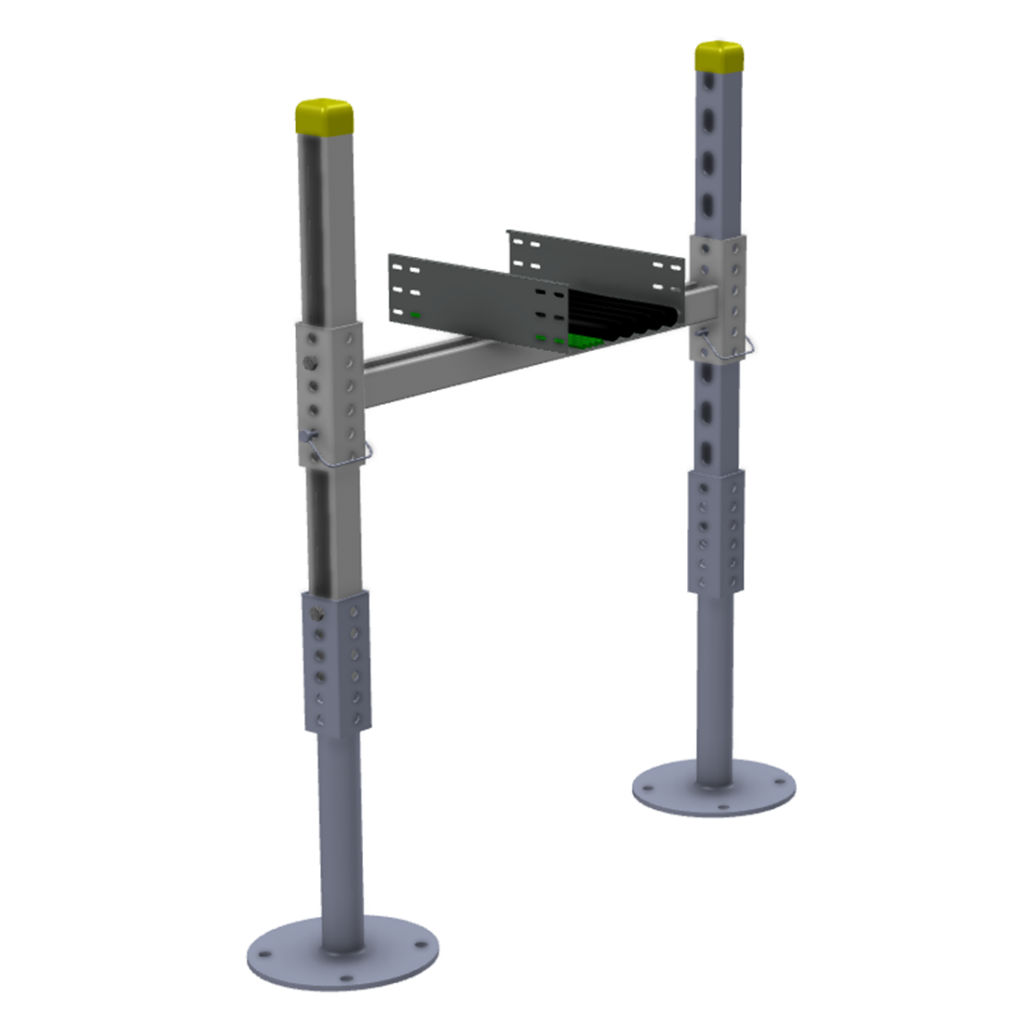
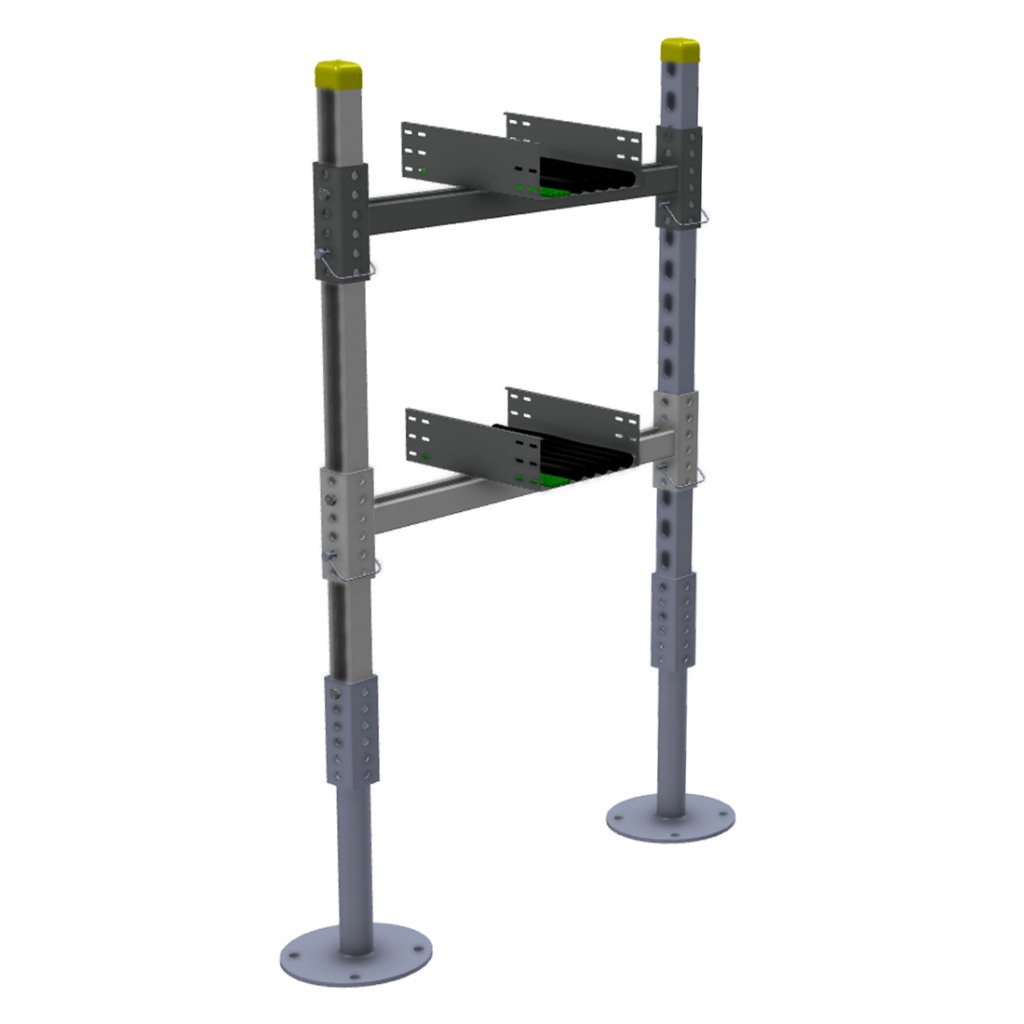
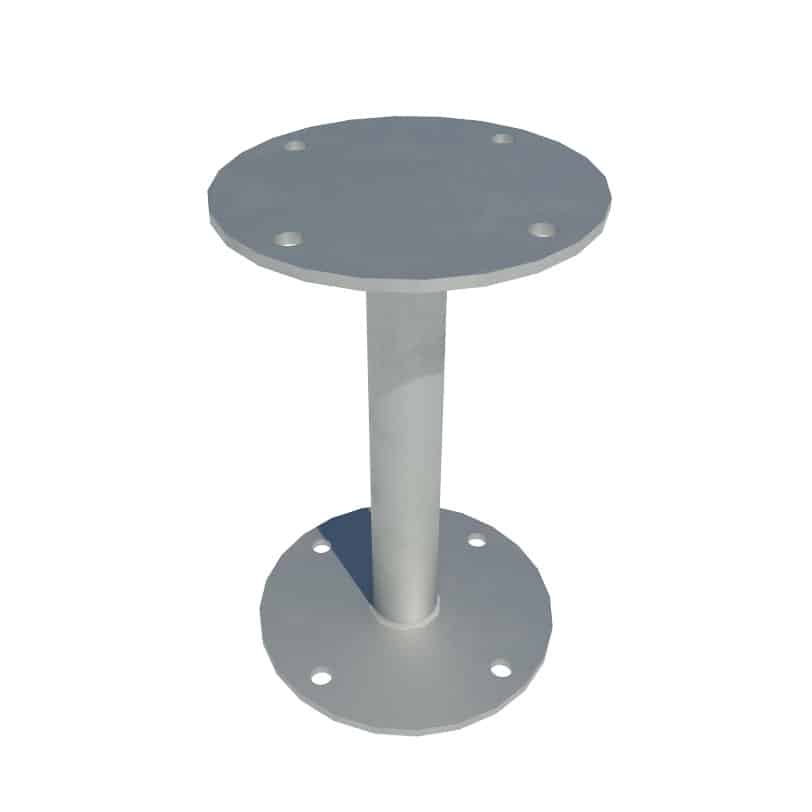
Wind and seismic conditions can significantly influence rooftop cable tray support design, particularly on taller buildings, exposed rooftops, and facilities supporting critical infrastructure systems. In higher wind regions, engineers may specify direct mount base styles instead of non-penetrating rubber bases to provide a more rigid attachment to the roof structure and help resist uplift and lateral movement. Optional tie-down base configurations may also be incorporated to provide additional stability in areas subject to stronger wind exposure or increased structural movement. In seismic zones, additional restraint methods, attachment details, or bracing strategies may be required to limit system movement during seismic activity and maintain support alignment throughout the cable tray run.
How Do You Safely Install Rooftop Cable Tray Supports? A Checklist
Safe rooftop cable tray installation starts long before the first tray section is set in place. Support layout, rooftop conditions, membrane protection, and tray routing all need to be coordinated before materials are distributed across the roof. Even small installation mistakes can create drainage problems, unsupported tray sections, membrane damage, or difficult maintenance access later in the project.
The checklist below focuses specifically on rooftop cable tray support installation using elevated support systems on commercial roofing assemblies. These steps help contractors maintain consistent tray support, protect the roofing membrane, and avoid common field installation problems during both straight runs and directional changes.
CABLE TRAY SUPPORTS INSTALLATION CHECKLIST
☑ Pre-Installation Site Assessment
Verify the roof structure can support the planned cable tray system and inspect the roofing membrane for existing damage before materials are staged. Confirm tray routing will not interfere with rooftop drainage paths, service walkways, or nearby mechanical equipment.
☑ Adhere to Engineering Plans
Follow project drawings, tray layouts, and manufacturer installation instructions throughout the installation process. Support spacing, tray elevations, and directional changes should match the approved design to maintain proper load distribution and tray stability.
☑ Use Appropriate PPE
Ensure all personnel use the required rooftop safety equipment during installation, including fall protection where necessary. Crews should also follow site-specific rooftop access and material handling procedures throughout the project.
☑ Ensure Proper Spacing and Alignment
Lay out support locations before installing tray sections to maintain consistent spacing and tray elevation across the roof. At tray turns, both the cable tray and the support assemblies should change direction together to keep the supports perpendicular to the tray path.
☑ Secure All Components
Verify all tray connections, framing hardware, and support assemblies are properly fastened before the system is placed into service. The cable tray should rest evenly on the support cross braces without twisting, shifting, or unsupported sections.
☑ Post-Installation Inspection
Complete a final rooftop walkthrough after installation is complete to verify support spacing, tray alignment, and overall system stability. Inspect the roof surface around all support locations to confirm no damage occurred to the roofing membrane during installation.
Professional Rooftop Cable Tray Supports from RTS
Rooftop Support Systems provides engineered cable tray support solutions designed specifically for commercial rooftop environments. RTS systems help contractors support cable tray routing while addressing membrane protection, corrosion resistance, rooftop coordination, and long-term system stability.
Non-penetrating support options help protect roofing systems and reduce the risk of leaks or warranty issues associated with unnecessary roof penetrations. RTS also offers direct mount and tie-down support configurations for projects requiring additional restraint or structural attachment. With pre-engineered components and rooftop-focused support designs, RTS helps contractors complete safer, more organized cable tray installations across commercial and industrial rooftops.